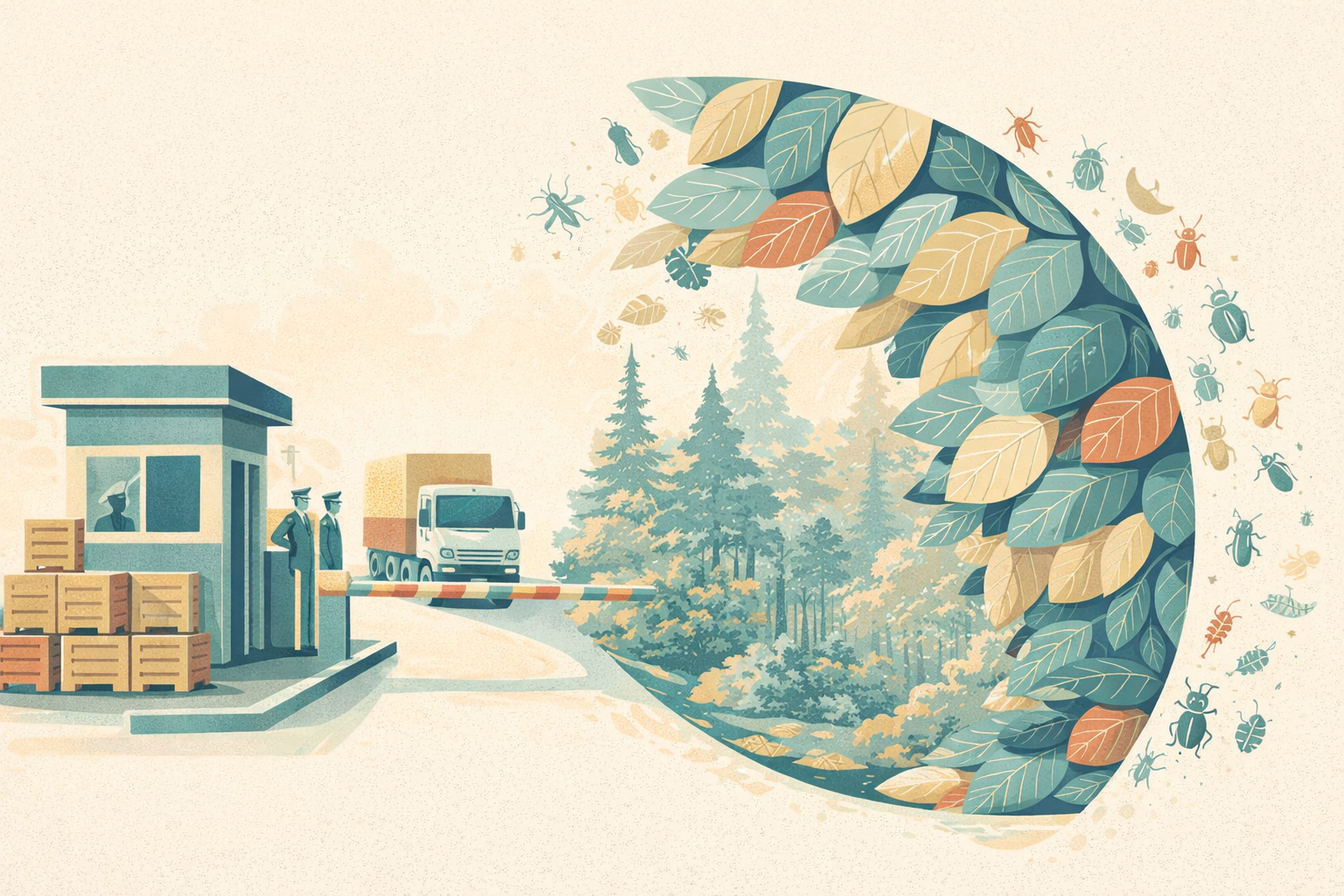
Healthy forests need healthy biology
We often treat forest policy as a debate about logging, roads, or park rules. That misses a harder truth. A forest can stay standing and still lose its health if trade keeps importing pests and pathogens that unravel its biology. USDA says more than 450 non-native pests and pathogens that feed on trees already live in United States forests. It also identifies wood packaging and live plants as the two main entry pathways. That is not a side issue. It is forest management. USDA also estimates $4.2 billion in annual forest-products losses from invasive insect pests.
Sustainability means more than keeping trees standing
Well-managed forests do more than store carbon. They protect water, support wildlife, supply wood, anchor recreation, and sustain rural economies. The Forest Service says healthy forests deliver clean water, wildlife habitat, recreation, jobs, forest products, and carbon storage. Its ecosystem-services work adds water quality, biodiversity, air filtration, and cultural value to that list. If invasive pests hollow out those functions, a forest stops delivering sustainability even if no one clears it.

USDA estimates $4.2 billion/yr in forest-products losses from invasive insect pests
One trade rule proved that policy can work
The best constructive example is ISPM 15, the international rule for pallets, crates, and other wood packaging. APHIS requires imported wood packaging to be debarked, treated, and marked, and noncompliant shipments cannot enter the country. A peer-reviewed PLOS One study found that wood borer infestation rates in wood packaging entering the United States fell 36% to 52% after implementation. APHIS has also eradicated Asian long-horned beetle infestations in Illinois, Boston, New Jersey, several New York areas, and Ohio. This policy cuts risk without pretending risk disappears.
The live-plant pathway looks too weak
The live-plant pathway remains the bigger concern. Forest Service research says imported live plants drove nearly 70% of damaging forest insect and pathogen establishments from 1860 to 2006. That same research calls current plant-import regulation outdated. APHIS has useful tools. NAPPRA blocks certain plants pending pest-risk analysis, and plant inspection stations use risk-based sampling on higher-risk propagative shipments. But APHIS also states the core problem plainly: imported plants can carry pests on a host, which makes establishment easier.
Issues beyond forestry
This issue reaches far beyond forestry professionals. Invasive species threaten clean water, recreation, wood production, wildlife habitat, human health, safety, and property values, according to the Forest Service. They also hit public budgets. One widely cited Midwestern estimate put ash-related losses, removals, and replacement costs between $13.4 billion and $26 billion. When policymakers tighten biosecurity, they protect ecosystems first. They also protect towns, homeowners, mills, nurseries, and taxpayers. Sustainability requires more than fewer chainsaws. It requires biologically intact forests that can keep doing their work.
A sustainable forest does not begin at the tree line. It begins at the border.


Leave a Reply