Forests are often discussed as carbon sinks, wildlife habitat, or scenery. All of that matters. But one of their most important functions is easier to overlook: forests are water infrastructure. Over two-thirds of drinking water worldwide comes from forested watersheds, and in the United States about 180 million people in more than 68,000 communities rely on forested lands to capture and filter drinking water. In the West, national forests and grasslands supply drinking water to almost 90% of the people served by public water systems.
Fire turns a forest problem into a city problem
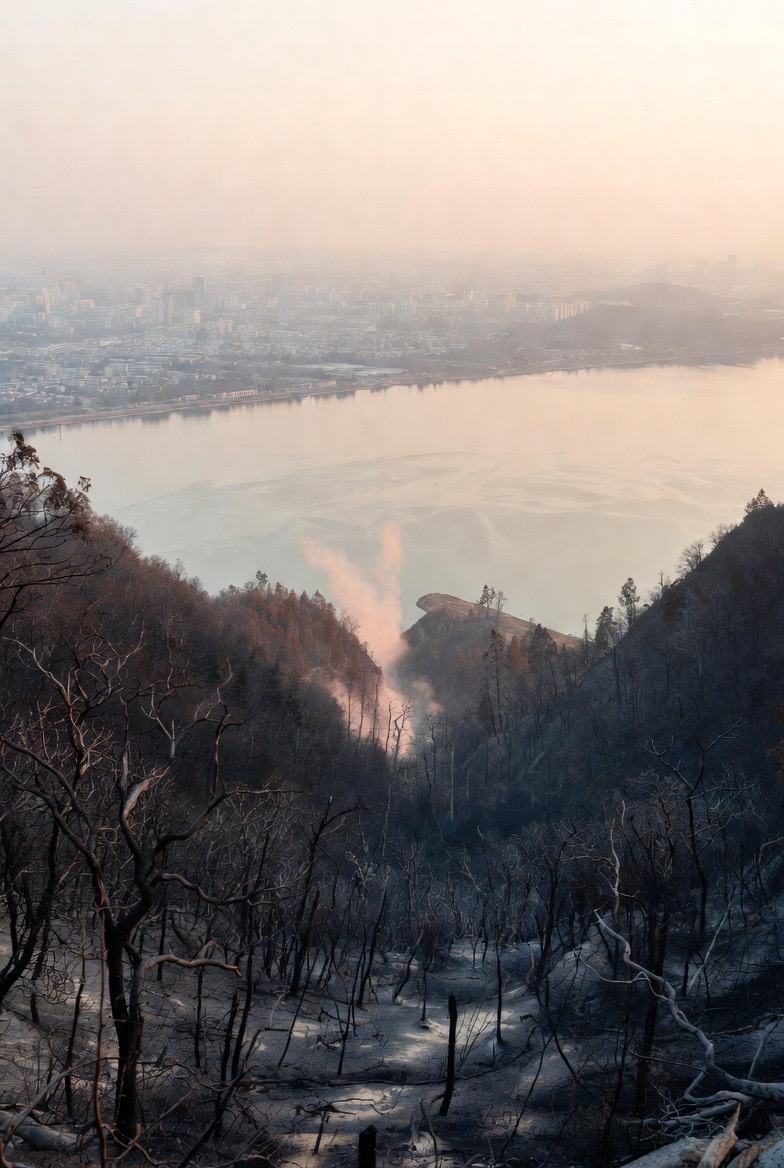
When a badly stressed or fuel-loaded forest burns at high severity, the damage does not stop at the tree line. The watershed changes. Soil sheds water instead of absorbing it. Erosion rises. Ash, nutrients, carbon, and sediment move downstream into rivers, reservoirs, and treatment plants. A 2025 study in Communications Earth & Environment found that after wildfire, carbon, nitrogen, and phosphorus concentrations reached 3 to 103 times pre-fire levels, while sediment rose to 19 to 286 times baseline levels. Some impacts lasted as long as eight years.
That is not an abstract ecological concern. It is a municipal risk. A 2025 study found that 64% of western U.S. community water systems, serving about 60 million people, had already experienced at least one upstream wildfire between 1984 and 2022. AP has also reported that cities from Paradise to Los Angeles have exposed how vulnerable water systems are to major fires. In Paradise alone, rebuilding the drinking water system after the 2018 Camp Fire is expected to cost $125 million.Climate change is intensifying fire weather, but that is not the whole story. A 2025 Nature Communications study found that a widespread fire deficit still persists across many North American forests. Many forests today are burning less often than they did historically, but when they do burn, the fires are often more destructive. The result is a dangerous combination of fuel buildup, severe fire, damaged soils, and downstream water impacts. This is why simply leaving forests alone is not a stewardship plan. In many fire-adapted forests, neglect can be its own form of mismanagement.

Over two-thirds of the world’s drinking water comes from forested watersheds
What serious stewardship looks like
The research points toward active management, not slogans. A 2024 meta-analysis found that mechanical thinning combined with prescribed burning and pile burning reduced later wildfire severity by 62% to 72% relative to untreated areas. Thinning by itself was less effective, which is a useful reminder that surface fuels matter.
Better management can also improve water storage before a fire ever starts. A March 2026 study in Washington’s eastern Cascades found that thinning increased snow depth and storage by 30% on north-facing slopes and 16% on south-facing slopes, with estimated hydrologic gains of 12.3 acre-feet of water per 100 acres on north-facing forest. Managed well, forests do not just burn better. They hold water better.
That is the real lesson for cities. Forest policy is not only climate policy or conservation policy. It is water policy. If urban leaders want cleaner water, lower treatment costs, and more resilient infrastructure, they need forests managed for resilience, fuel reduction, and watershed health, not just admired from afar.


Leave a Reply