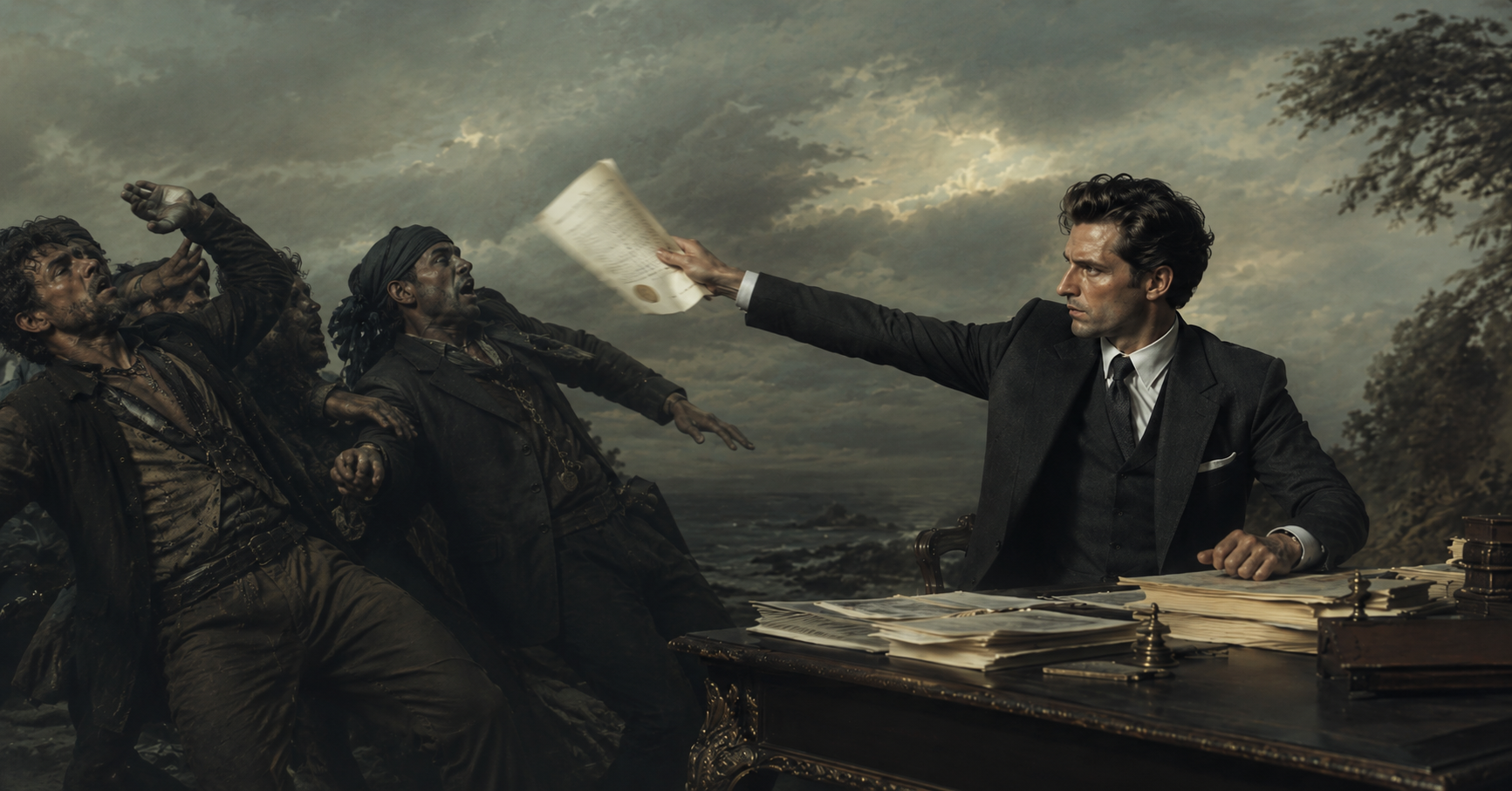
A waypoint, broker, customer, or permit should never become a substitute for reality.
That is the weakness bad actors in industries like gold, electronics, and timber exploit in order to launder goods connected to a wide array of exploitation and illegality. Oftentimes, the papers look orderly, but the product may tell a different story. The good news is: we only need 5 banks on board to verify 87% of US trade.
Gold, electronics, and timber do not need identical documentation. They need the same governing principle.
For gold, prove source.
For electronics, prove end use.
For timber, prove harvest.
Federal Reserve Research
Federal Reserve research makes it clear that these weaknesses in the global supply chain constitute a large problem, and a great opportunity. Modern trade depends on financial, logistical, and documentary waypoints where goods receive their market identity, so the fact that criminals lie on forms is secondary compared to the many benefits both in economic and ethical terms that would flow from focusing more attention and energy on these waypoints.
Trade finance is one of those waypoints. Banks help international commerce move by financing shipments, confirming letters of credit, processing documents, and supporting importer-exporter relationships. In theory, those documents create trust between parties who may never meet. In practice, they serve to cover abuse, theft, and destruction once the right rubber stamp has been obtained in between the origin and the destination.
The Fed’s research on U.S. bank trade finance found that the five largest trade-finance providers accounted for more than 75% of trade-finance loans. Likewise, the five largest banks accounted for more than 87% of reported trade-finance claims.
That concentration means a relatively small set of financial institutions need to be engaged to address the formal documentation layer of trade. If those institutions require stronger source, route, ownership, and end-use proof, bad supply-chain actors lose access to respectable financial channels.
Banks can flag high-risk routes, demand beneficial ownership information, treat transshipment through a non-producing country as a risk signal rather than a harmless clerical detail, and can decide that vague paperwork no longer deserves financial trust.

5 banks could verify 87% of US trade
The Gold Example is Typical
Gold is compact, valuable, fungible, and easy to melt. Once traders aggregate or refine it, the metal loses its visible connection to the mine, river, or criminal network where it began.
In the 2017-18 Elemetal/NTR Metals case, prosecutors described how illegal gold moved through shell companies and third-party countries before sale to U.S. refineries. The goal was to hide the true source from law enforcement and make the metal acceptable to the market. 97.5% of deforestation in Peru is associated with illegal gold mining.
After Peruvian authorities seized $18.8 million in gold bound for NTR and other refineries, NTR’s exports from Peru reportedly collapsed by 92%. But the demand did not vanish. It moved. Purchases in Ecuador and Bolivia rose by $485 million, and one trader put the scheme in a text message: “We need more Peruvian gold from Bolivia and Ecuador. Can u make it happen?”
Legislation, diplomacy, and persuasion of other sorts could therefore target source proof rather than one banned route. U.S.-regulated banks, refiners, insurers, vaults, dealers, and transporters should not accept gold unless the source origin is verified, beneficial owners are disclosed, and transit jurisdictions remain transit jurisdictions. If a country did not mine the gold, it should not become the gold’s origin merely because an invoice says so.
Big Bang for the Buck
Cleaning every mine, mill, forest concession, shipping lane, warehouse, and subcontractor would require an enormous enforcement apparatus; focusing attention on the financial and documentary waypoints requires much less and touches far more trade. A bank does not need to inspect a Peruvian riverbank to ask why Peruvian gold suddenly appears through Ecuador. A refinery does not need to police every mine to reject gold whose source cannot be verified. A customs agency does not need to solve every forest crime to treat a non-producing transit country as a red flag. When a small number of financial institutions use trade chokepoints to demand better proof, they raise the cost of laundering across the whole system.


Leave a Reply